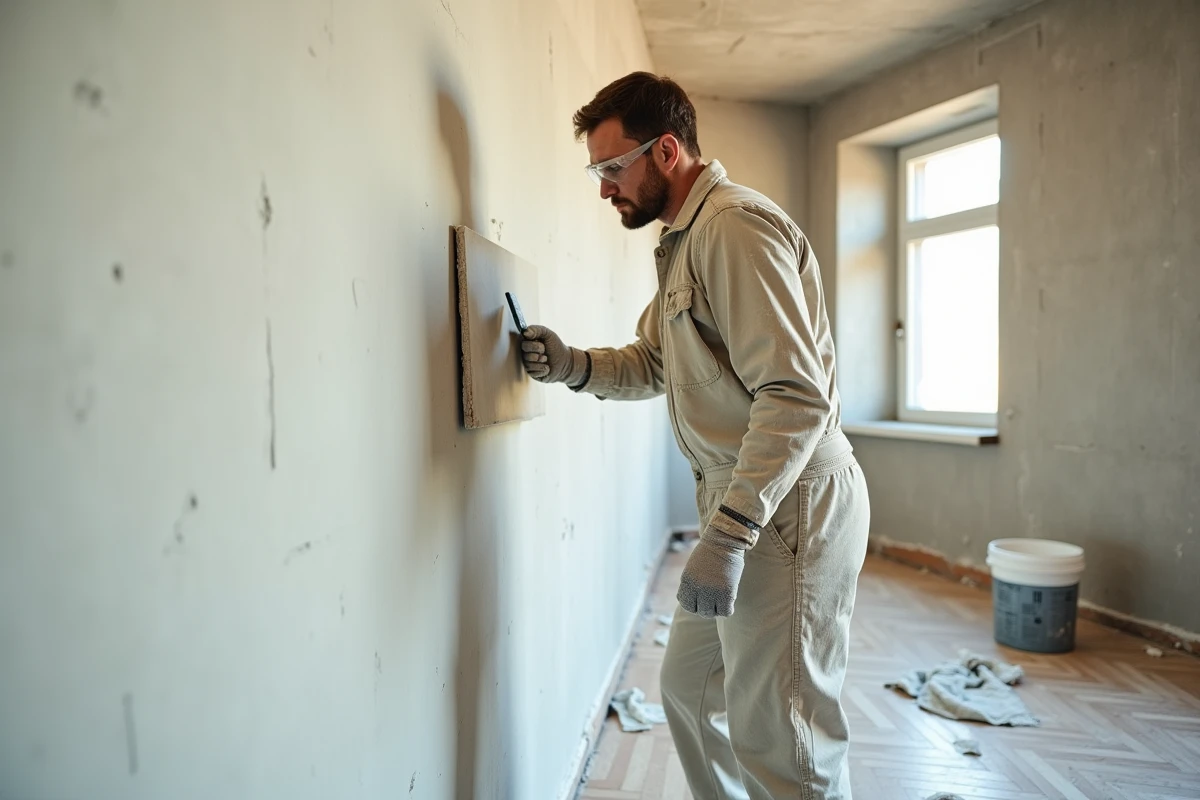
The smoothing compound is applied after filling in cracks and before painting. Its cost per square meter depends on parameters that are rarely detailed in quotes: the condition of the substrate, the number of passes required, and the type of product chosen. Budgeting for this step requires understanding what causes the bill to vary, far beyond the simple price of the bag.
Technical factors that affect the cost of smoothing compound
The price displayed on a pot or bag of compound reflects only a fraction of the actual budget. Two projects of the same surface area can generate very different bills depending on the nature of the substrate to be treated.
An old, irregular, or cracked plaster wall often requires two passes of compound, sometimes three. Each additional pass adds product, drying time, and labor. In contrast, a new drywall partition, with properly installed seams, may only need a single thin application.
The ceiling height also plays a significant role. Beyond two and a half meters, working from a ladder or scaffold slows down the application and increases the time spent per square meter. Ceilings themselves are more expensive to coat than walls because the working position is more constrained and the risk of drips requires a slower application technique.
The choice between a powdered compound to mix and a ready-to-use paste compound also affects the budget. The powder is generally cheaper per kilogram but requires preparation time and skill to achieve the right consistency. The paste, more expensive to purchase, reduces the risk of dosage errors and speeds up implementation.
Comparing the price of smoothing compound per m2 among several contractors requires checking what each quote actually includes: intermediate sanding, dusting, number of layers, supply of the product.
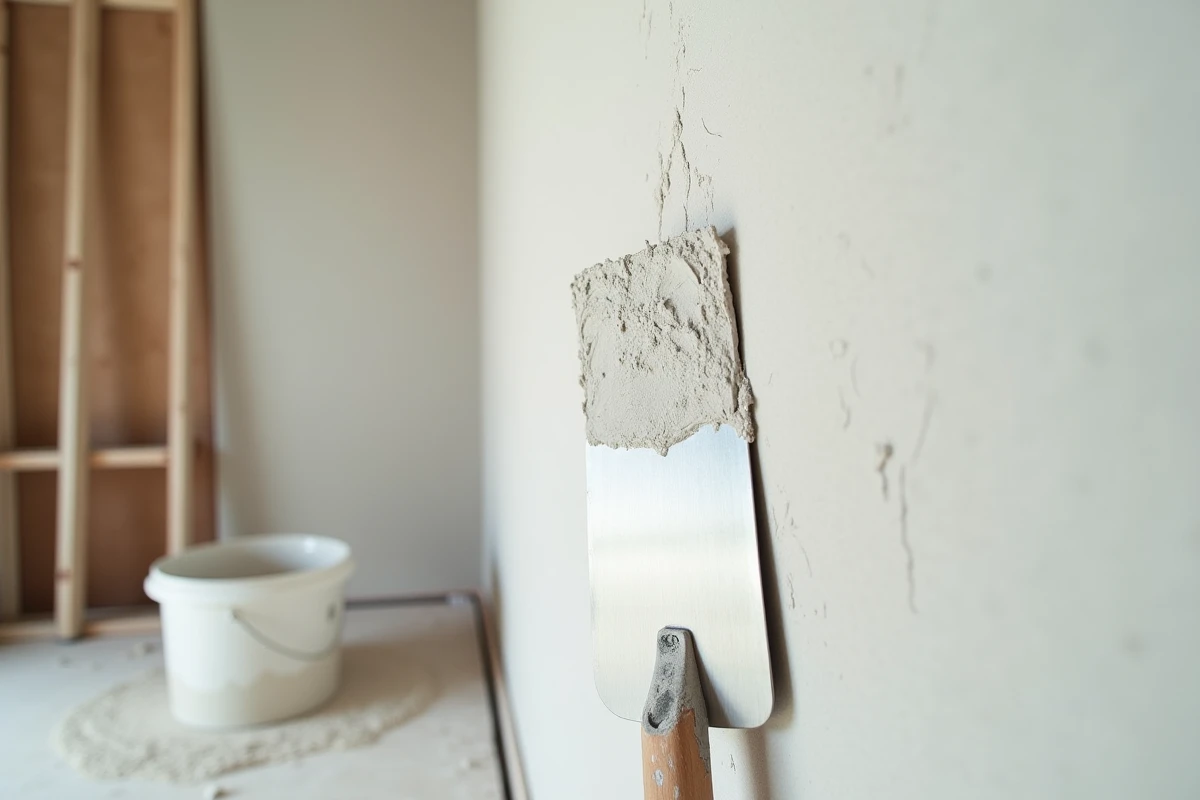
Smoothing compound per m²: what a professional quote covers
A contractor’s quote does not limit itself to the line “smoothing compound.” Several items are added, and ignoring them skews any attempt at comparison.
Preparation of the substrate
Before applying the compound, the professional must ensure that the wall is clean, stable, and adherent. This may include scraping off an old coating, applying a bonding primer, or filling in large holes. These steps are sometimes billed separately, sometimes included in a global package.
A bonding primer is necessary on smooth surfaces (old tiles, oil-based paint) or very absorbent surfaces (old plaster, cellular concrete). Its absence can cause the compound to detach, requiring a complete redo.
Sanding and finishing
After drying each pass, a fine sanding with the appropriate grit is necessary to achieve a perfectly flat surface. This task represents a significant portion of the labor time. On a complete job (walls and ceilings of a room), sanding can take as much time as the application itself.
The dusting that follows sanding affects the adhesion of the paint. A poorly dusted wall adheres less well to the final coating. This detail, rarely visible on a quote, distinguishes a well-executed job from a shoddy one.
Smoothing compound for supply only: comparing products
For those considering applying the compound themselves, the choice of product deserves special attention. Price differences among brands reflect concrete differences in performance.
- Standard powdered compounds offer the best quantity/price ratio, but their short setting time (often less than an hour) leaves little room for correcting defects.
- Ready-to-use paste compounds allow for more flexible work, with a longer open time, but the cost per covered square meter is significantly higher.
- Some so-called “film-forming” compounds are designed for very thin passes on already relatively flat surfaces. Their yield per square meter is higher, but they do not compensate for marked irregularities.
- Fiber-reinforced compounds, enhanced with microfibers, reduce the risk of micro-cracking on slightly mobile substrates (drywalls, old structures).
The actual yield depends on the thickness applied, which varies according to the condition of the substrate. The manufacturer’s indications correspond to ideal conditions, rarely encountered on a renovation site. In practice, one should expect a product consumption higher than that stated on the packaging.
Hiring a professional or doing it yourself: the real budget difference
Labor represents the largest portion of the total cost of smoothing compound applied by a contractor. Supply alone constitutes only a minor fraction of the quote.
Doing the compound work oneself can significantly reduce the bill, provided one has the right equipment: trowels of various widths, a compound tray, an orbital sander or sanding block, fine-grit sandpaper. Without these tools, the result may reveal every defect under raking light once the paint is applied.
The application technique is acquired with practice. On a small wall in a hallway, the learning curve is manageable. On a living room ceiling or a large open space, touch-ups and joints quickly become visible. Field reports vary on this point: some DIYers achieve satisfactory results on their first attempt, while others notice defects that only a professional could fix without sanding everything down.

Total budget for a room: items not to forget
Estimating the cost of smoothing compound without including additional expenses almost always leads to a budget overrun. Here are the items often underestimated:
- The bonding primer, essential on certain substrates, adds a cost per square meter and additional drying time.
- Protective materials (tarps, masking tape) represent a modest but recurring item on every job.
- Sanding consumables (abrasive discs, sanding sponges) wear out quickly, especially on large surfaces.
The total cost per square meter varies greatly depending on the initial condition of the substrate. A new wall made of plasterboard and an old wall made of traditional plaster do not require the same quantities of product or the same amount of labor. Requesting several detailed quotes, specifying the exact nature of the walls to be treated, remains the most reliable method for obtaining a realistic estimate.