
Keeping children occupied daily without resorting to screens poses a recurring challenge for parents, especially outside of school periods. The creative and playful activities available number in the dozens, but not all are equal in terms of real engagement for the child. The choice depends on age, available materials, and the time the adult can dedicate to supervision.
STEAM Activities for Kids: When Science Meets Crafting
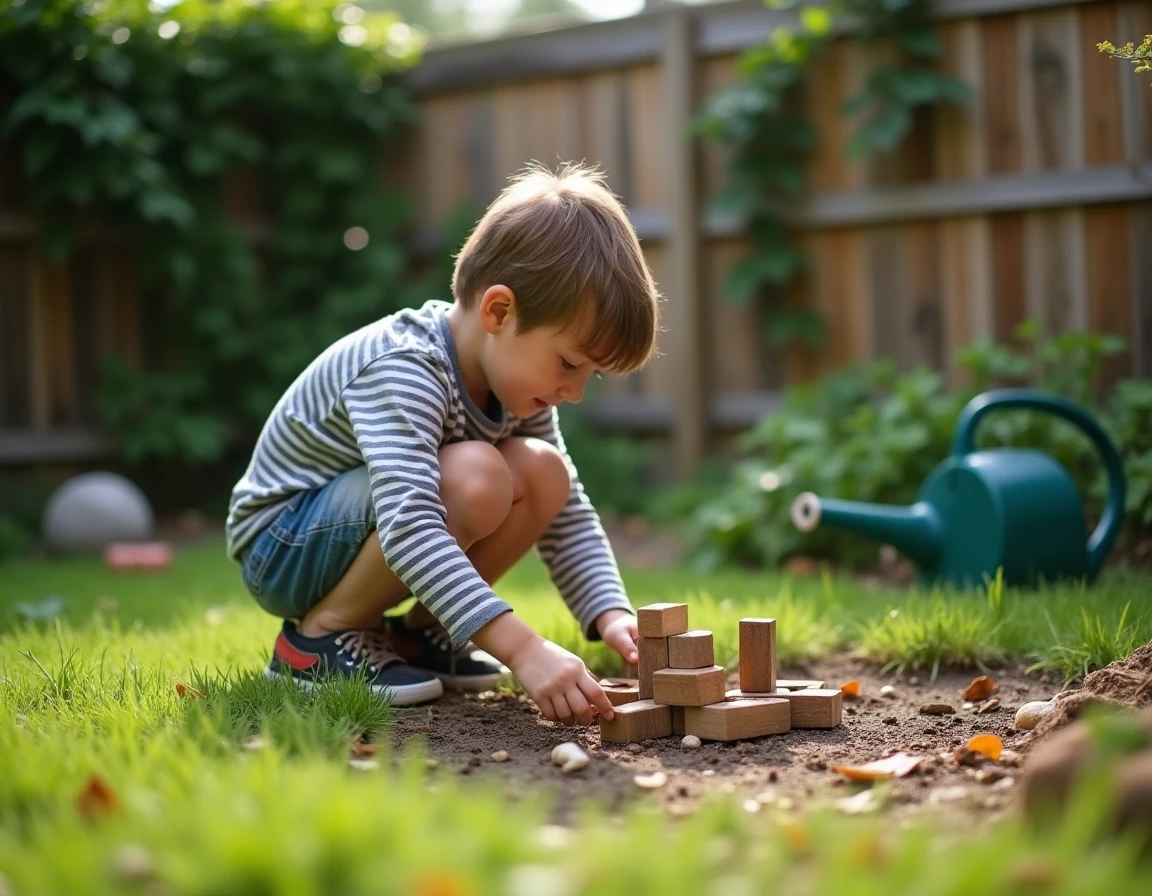
Coloring, painting, cutting: these classics remain useful, but they only cover part of what a child can explore. The experimental dimension, where one tests, fails, and tries again, is often absent from creative afternoons.
So-called STEAM activities (science, technology, engineering, art, mathematics) offer a way to combine artistic manipulation and logical reasoning. For example, creating an electric circuit with conductive modeling clay allows a child to understand a physical principle while shaping forms. The La main à la pâte foundation offers STEAM kits and challenges suitable for family life, with an explicit goal: to develop scientific thinking and creativity simultaneously.
Here are some ideas that work with household materials:
- Make a volcano with baking soda and vinegar, then draw and paint the surrounding landscape (geology + visual arts).
- Build a bridge with popsicle sticks and test its strength with increasing weights (engineering + measurement).
- Create salt or sugar crystals on a string, then observe them with a magnifying glass every day for a week (chemistry + patience).
These activities keep children engaged for longer periods than simple crafts because they introduce an open question: will it work? This uncertainty holds attention much better than a closed instruction.
Francophone resources compile this type of challenge for families, such as those available at https://lespetitspoissontrouges.fr/, which offers ideas suitable for various ages.
Emotional Regulation Games Integrated into Daily Activities
Since the post-Covid period, mental health professionals have raised concerns about the rise of anxiety disorders in young children. The Haute Autorité de Santé recommends, in its guidelines on child and adolescent anxiety, to integrate calming practices into daily life.
The French Psychiatry Federation has recommended since 2022 that these moments no longer be treated as optional “bonuses” but as a structuring component of daily activities. Children’s yoga, guided breathing games, “calm-down bottles” (a bottle filled with water, glycerin, and glitter that the child shakes and then observes), or mandalas to color mindfully are part of this approach.
The idea is not to turn every afternoon into a therapeutic session. A calm time of ten to fifteen minutes, placed between two more dynamic activities, is enough to change the day’s rhythm. Some children respond better to a slow manual activity, while others prefer a breathing exercise, but the principle of alternating between stimulation and calming is widely agreed upon.
Making a Calm-Down Bottle
A clear plastic bottle, warm water, vegetable glycerin or clear hair gel, fine glitter. The child fills it, shakes it, and observes the slow descent of the glitter. The act of making it is already a calming time in itself, and the object can be reused in the following days.
Daily Creative Micro-Challenges: Structuring Without Rigidifying
Since 2024, francophone family apps and newsletters have been offering a creative challenge each day. The principle is simple: a short instruction (a photo challenge, a mini-story to complete, a collaborative riddle for parents and children) that frames the activity without locking it down.
This format has a concrete advantage over the classic list of activities: it eliminates the decision-making time that precedes play. Many parents know the moment when the child successively rejects all suggestions. A single challenge, presented as a daily appointment, bypasses this negotiation.
Here are some examples of micro-challenges that can be done without specific materials:
- Draw an imaginary animal by combining three real animals, then invent a name and habitat for it.
- Photograph five objects in the house that are the same color, then create a digital or paper collage.
- Write a three-sentence story where the main character is an object from the living room (the remote control, the cushion, the lamp).
- Build the tallest tower possible with a single chosen material (books, cushions, cans).
This format works particularly well during vacations when the school routine disappears and the days lack structure. A fixed challenge at a fixed time provides an anchor point without imposing a rigid schedule.
Family Craft Activities: What Maintains Engagement Over Time
A craft that lasts five minutes before being abandoned occupies no one. Three factors explain why some activities captivate and others do not.
The first is the degree of choice given to the child: a forced coloring activity is less interesting than a free drawing with a suggested theme. The second is the narrative dimension. A craft that tells a story (building a village, creating a character that will play a role in a later game) generates a greater emotional investment than an isolated decorative object.
The third factor is the adult’s participation. A child who sees their parent drawing next to them engages differently than if they are simply given materials and instructions. The active presence of the adult transforms an activity into a moment of complicity, which radically changes the attention span.
When Boredom Has Its Place
Filling every minute of the day with structured activities is not a goal in itself. The ideal ratio between directed time and free time varies according to the child’s age and temperament, but developmental psychologists agree on one point: occasional boredom stimulates initiative. Allowing a child to be bored for twenty minutes, with accessible materials but no instructions, often leads to more inventive play than any adult suggestion.
Creative and fun ideas for keeping children occupied daily are plentiful. The difficulty lies less in choosing the activity than in how to introduce it, adapt it to the mood of the day, and accept that it won’t work every time.