When should I harvest my cannabis?
With a few exceptions, cannabis is an annual plant that should be harvested indoors in the fall when grown outdoors or indoors 6 to 13 weeks after germination.
Not all cannabis varieties should be harvested at the same time. If you purchased your cannabis from a seed bank, the number of days before harvest is usually known. But maturity is not the only factor to consider, especially outdoors.
Weather, the date of the last feeding, and a fungal attack are all factors that can affect your harvest.

maturity
When your cannabis matures, its trichomes become milky and are no longer transparent. If the pistils are brown, that is also a sign that harvest is near. However, oxidized (brown) pistils are not always a sign that the plant is mature, as in some varieties, there may be pistils that oxidize very quickly compared to the overall maturity of the plant. Conversely, some varieties do not oxidize the pistils.
Therefore, if you can, invest in a magnifying glass that you can use to monitor the trichomes. These develop as the plant grows. They are initially transparent, then turn milky. After all, if they also oxidize, it means we are passing through the optimal degree of maturity of the plant and it will be more conducive to the development of mold and fungi.
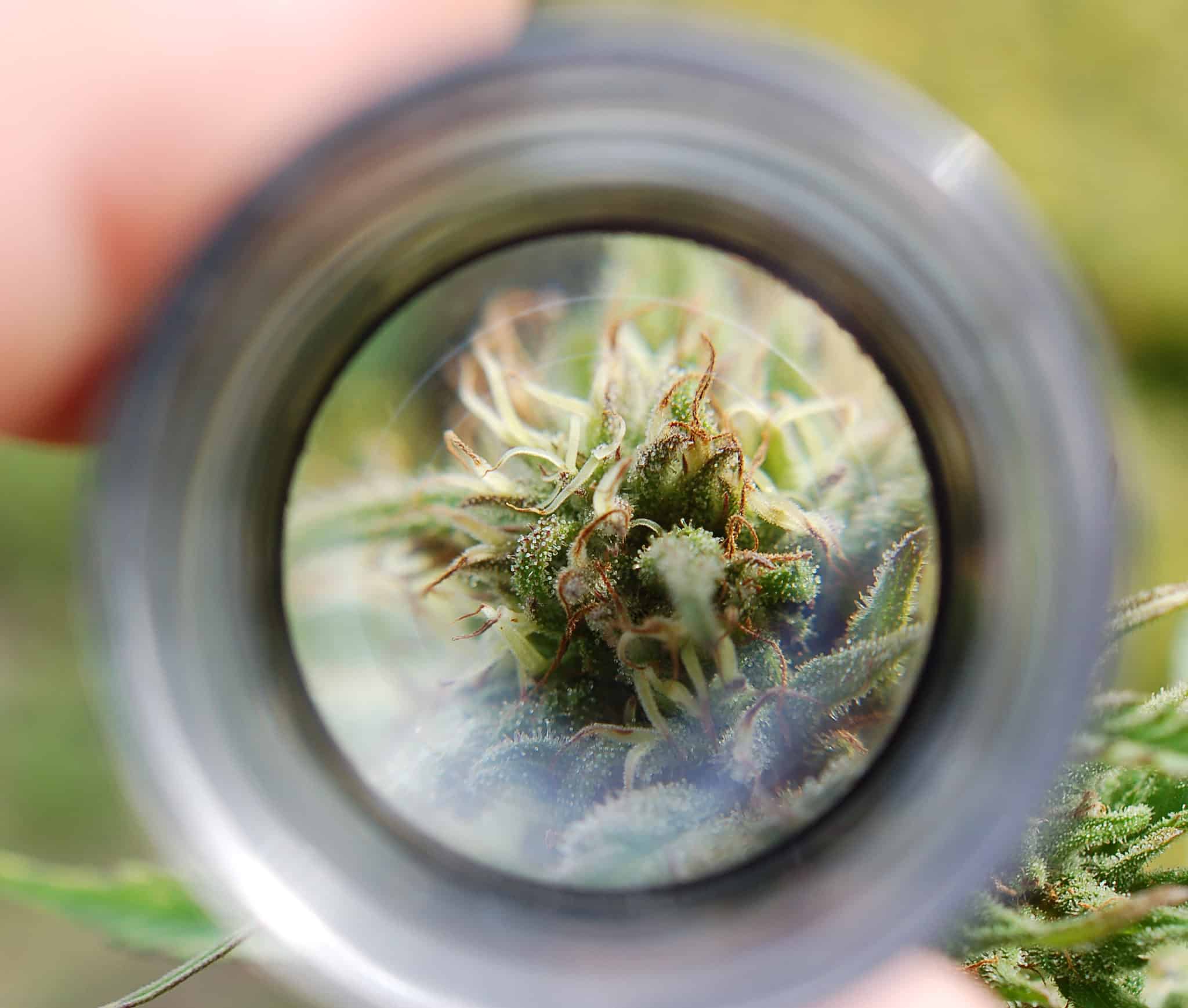
magnifying glass observation
Mature trichomes
The
weather
Bad weather can force you to cut your cannabis earlier than expected, as there is a risk that your harvest will be destroyed by mold. Conversely, an Indian summer may allow you to bring your cannabis to good maturity. It depends on your climate and your luck. It is best for your cannabis to be dry at the time of harvest. Harvest in the sun after a day or two of consecutive sunshine. Check the weather carefully to predict the likely date of your harvest and plan to flush. Flushing means watering only with clean water to rid the plant of excess fertilizer.
The last feeding
It is necessary to wait at least one week after the last feeding to harvest. This date varies particularly depending on the amount of fertilizer the plant receives. Cannabis is often continuously fertilized during indoor cultivation. In this case, it is necessary to wait at least two weeks before harvesting. Outdoors, fertilization is often less frequent and the plant benefits from rainwater; in these circumstances, wait at least 1 week. However, those who have grown your plants, if you feel that you have heavily fertilized your plant, then also allow for flushing for two weeks. It is better to flush a few days longer than shorter. The flushing period is quite long; it is important not to fertilize until the last minute. In fact, if the weather turns bad and/or your plants start to mold, you need to be able to harvest. If you need to deal with a fungal attack due to bad weather, flush. If you live in a particularly rainy area, do not fertilize your plants after mid-September.
Mold
The two fungal infestations that are most feared by your cannabis, especially outdoors, are gray mold and mildew.
Botrytis
Botrytis or gray mold leaves your flowers sculpted from the inside. You will notice that the color of your flower (brownish) and a fluffy cloud.
In outdoor cultivation
Heat and humidity promote the appearance of this fungus. If your plants start to grow and there are no sunny days on the horizon, it is better to cut your cannabis. In fact, this fungus spreads quite quickly. Nothing, except for good weather, can prevent its appearance. However, some varieties are more sensitive to it than others. If you are in a region with rainy autumn weather, avoid varieties that are sensitive to it. If you hope that you can continue your harvest due to favorable weather, only cut the branches or plants that are really affected. You need to remove the rotten buds. You do not have to smoke or eat them.
In indoor cultivation
If the fungus appears indoors, it means that the humidity is far too high. First, buy a hygrometer and thermometer to monitor your environment. You probably need to improve the ventilation of your grow room using fans or an extractor fan; otherwise, you can also invest in a dehumidifier. You may also need to adjust your watering method. Perhaps you are overwatering? Or invest in a drip system that reduces humidity by adding the necessary amount of water to your plants. Finally, you might also consider reducing the number of plants you are growing. Too many crowded plants will increase humidity and prevent good ventilation of the flowers.
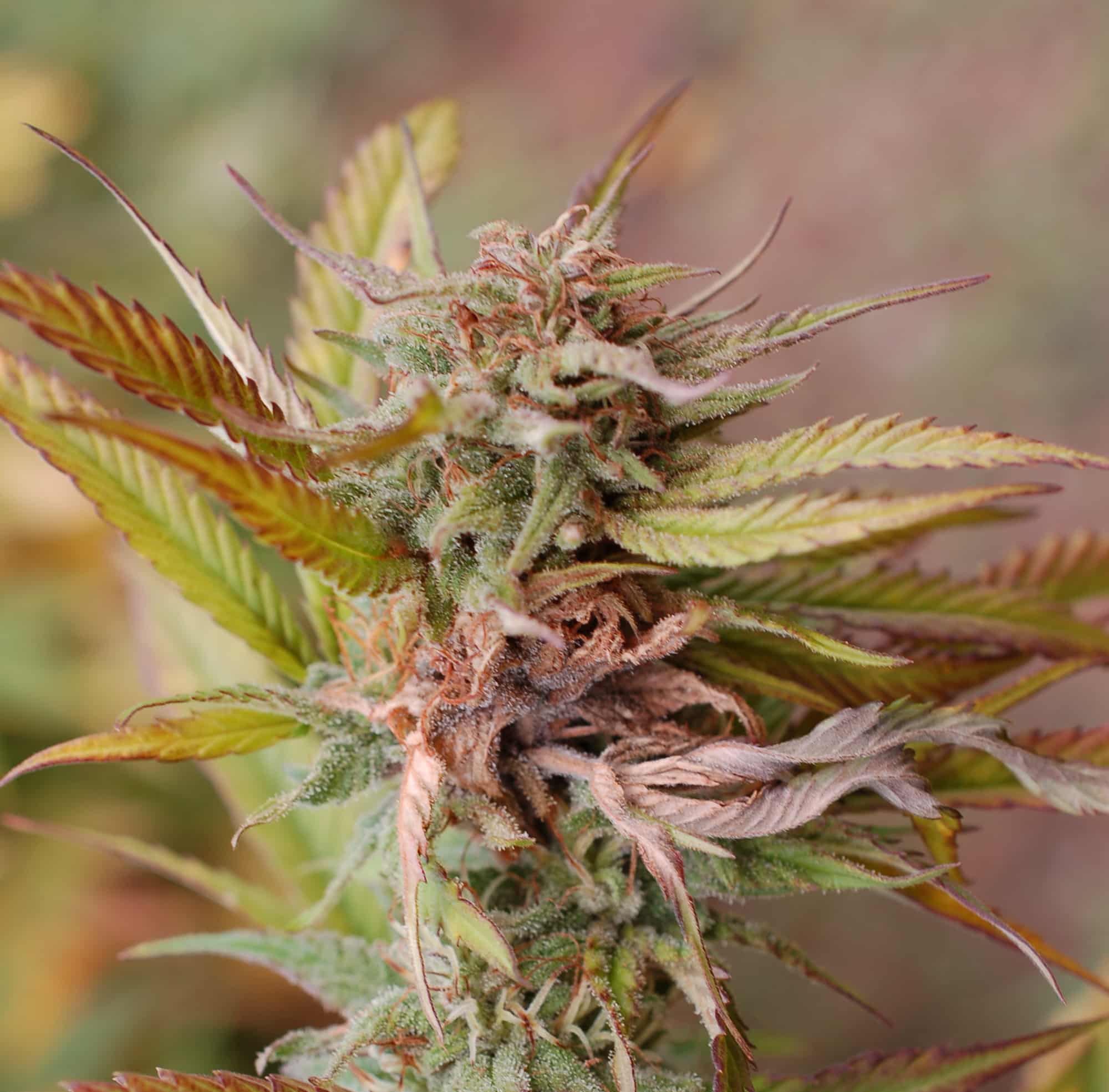
Botrytis
Botrytis attack on a cannabis bud
Powdery mildew
Powdery mildew is a volatile fungus whose spores will spread over your cannabis like the wind. It grows like botrytis in humid and warm climates. This fungus first appears on the leaves. If you spread powdery mildew, it can even penetrate your flowers. Some varieties are more sensitive, but it will eventually attack all cannabis plants. The advantage we have against this fungus is that there are biological preventive treatments such as fenicur based on fenicur.
In outdoor cultivation
Powdery mildew develops in fairly warm climates; it is more likely to be a risk in temperate climates in September when it regularly rains and is warm during the day. A preventive treatment before flowering in mid-summer is always beneficial and will protect you from invasions. It is very invasive, but in small growing areas, it is possible to gently hand-pull affected leaves. Be careful, the spores are very volatile, and mishandling can facilitate the spread rather than reduce it. If powdery mildew occurs early in the season, try to cut your cannabis to aerate it. If you are almost mature and the weather remains warm, then you will probably need to harvest. A cold snap could slow its spread, but otherwise, powdery mildew spreads extremely quickly and can easily ruin crop surfaces.
In indoor cultivation
Powdery mildew can be problematic as it often thrives in warm conditions, and light humidity promotes its development. Bio-preventive treatments such as fenicur will be beneficial during growth and will prevent powdery mildew from developing too much in sufficiently temperate grow rooms. Also, try to lower the temperature and humidity of your grow room. Powdery mildew does not like cold, and its spread is slowed.
If you cannot control powdery mildew, and it is too late to treat it, unfortunately, you will need to harvest.
What to do after harvesting cannabis?
It should be dried in a ventilated room in the dark. Then, it will be necessary to carefully trim it before starting the curing process in a glass jar.
Happy harvesting!
Tag : CBD Vape Pen