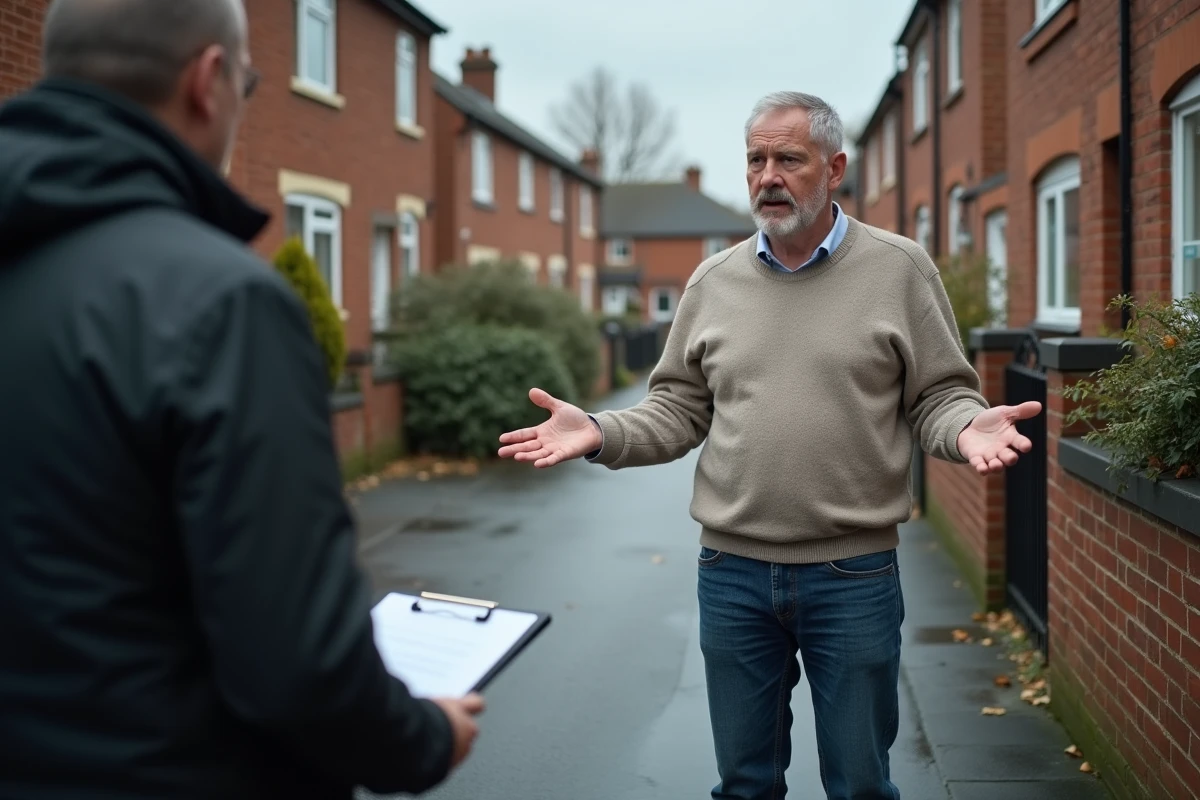
Nothing frightens a creditor more than an empty apartment and dwindling accounts. In the UK, bailiffs, known as “enforcement agents” in local jargon, do not just walk into any living room to seize the TV or the sofa. British law draws clear lines: not everything is seizable, far from it. And when the bailiff shows up without finding anything to take, the debt does not disappear. It settles in, silent but very real.
Unpaid service charges abroad: what are the consequences for property owners in the UK?
Investing in the UK attracts many foreigners, but once faced with unpaid service charges, the reality quickly becomes rougher. Despite the pressure from creditors from elsewhere, the British recovery framework proves to be locked down. If no assets are available, neither visible movable goods nor a vehicle parked nearby, nor a spotted bank account, the procedure yields nothing concrete for the bailiff.
On the creditor’s side, the road stretches and becomes heavier: files sent, judgments to be recognized by the British court, official translations, European forms to complete… This administrative journey is long but does not cancel anything. The debt does not vanish. It can resurface at any moment, ready to complicate the owner’s life, today or tomorrow.
Several outcomes await those targeted by the procedure:
- The existence of the debt can be recorded in an official British register, seriously hindering any credit application.
- To sell the property, settling the debt becomes essential: a creditor can easily place a hold on the transaction.
- As soon as an asset is identified, whether it is a secondary residence or a recently acquired car, seizure becomes a fearsome weapon.
In the face of these complexities, it is better to anticipate. Taking the time to understand the landscape, decode the specifics of the magistrate’s court, and master the timing of the steps can avoid many sudden closures. For those wishing to delve deeper into the subject, just read the analysis on Jouer en Bourse: the concrete workings of recovery and the subtleties of local law are dissected without reservation.
What happens when you have no assets to hand over to British bailiffs?
In the UK, a bailiff does not play for extra time. They check the premises, list what can theoretically be taken. But when pockets are empty and assets non-existent, everything comes to a halt. Nothing leaves your home. Forced sale does not occur, the case remains open but no immediate spectacular action happens for the debtor.
However, be careful: if the furniture remains there and no one knocks on the door, the debt does not erase itself. Recorded in the registers, it waits for its moment and can spring up at the first sign of recovered assets. The creditor watches, ready to assert their rights as soon as an account fills up, when a car arrives, or when the financial situation improves.
Several repercussions can unfold in this context and stretch over time:
- Disrupted administrative procedures: difficulties in renewing official documents or validating certain civil status acts.
- Repercussions with credit institutions: unfavorable debt profile, which blocks or complicates any new borrowing.
- Addition of the debt to the magistrate’s court register, subject to the recognition of a valid foreign act.
A formal notification, often by registered letter, and a series of formalities then take over. The rules of deadlines change according to the source of the decision. The recognition of an external judgment requires providing a suitable form, sometimes involving a lawyer. Nothing is automatic, especially in a system like that of the UK which jealously protects its judicial process.

Overview of remedies and best practices in the face of property disputes in the European Union
The management of property disputes varies greatly across Europe. French procedures differ from the British system, particularly regarding the management of unpaid charges and the enforcement of decisions from elsewhere. The choice of court, deadlines to be respected, and the recognition of a foreign decision shape the contours of the path to follow.
For expatriate owners, the diversity of rules quickly complicates matters. Finding the competent jurisdiction, obtaining recognition of a French judgment in the UK, juggling with a standardized form… all require organization and preparation. Moreover, it is not enough to win on paper. Adhering to British protocol, the attention paid to each civil status act, the faithful translation of documents, all weigh heavily in the balance.
When the dispute crosses borders, vigilance must prevail. Property managers, legal advisors, and co-owners must agree, exchange, and consolidate each file piece by piece, keeping an eye on deadlines. Because the slightest flaw can send everyone back to square one, with no harmonized recourse to make up for lost time.
Some best practices are essential to avoid setbacks:
- Check the jurisdiction of the magistrate’s court based on the location of the property or the debtor.
- Prepare a form that meets European expectations, accompanied by a certified translation if necessary.
- Stick to national requirements and respect each deadline, adapting your responsiveness to each country.
Ultimately, dealing with a property debt across borders is an endurance race. Papers to follow, deadlines not to be missed, British rigor does not tolerate any improvisation. As long as the situation has not evolved, everything remains tense, ready to bounce back at the first sign of financial improvement.