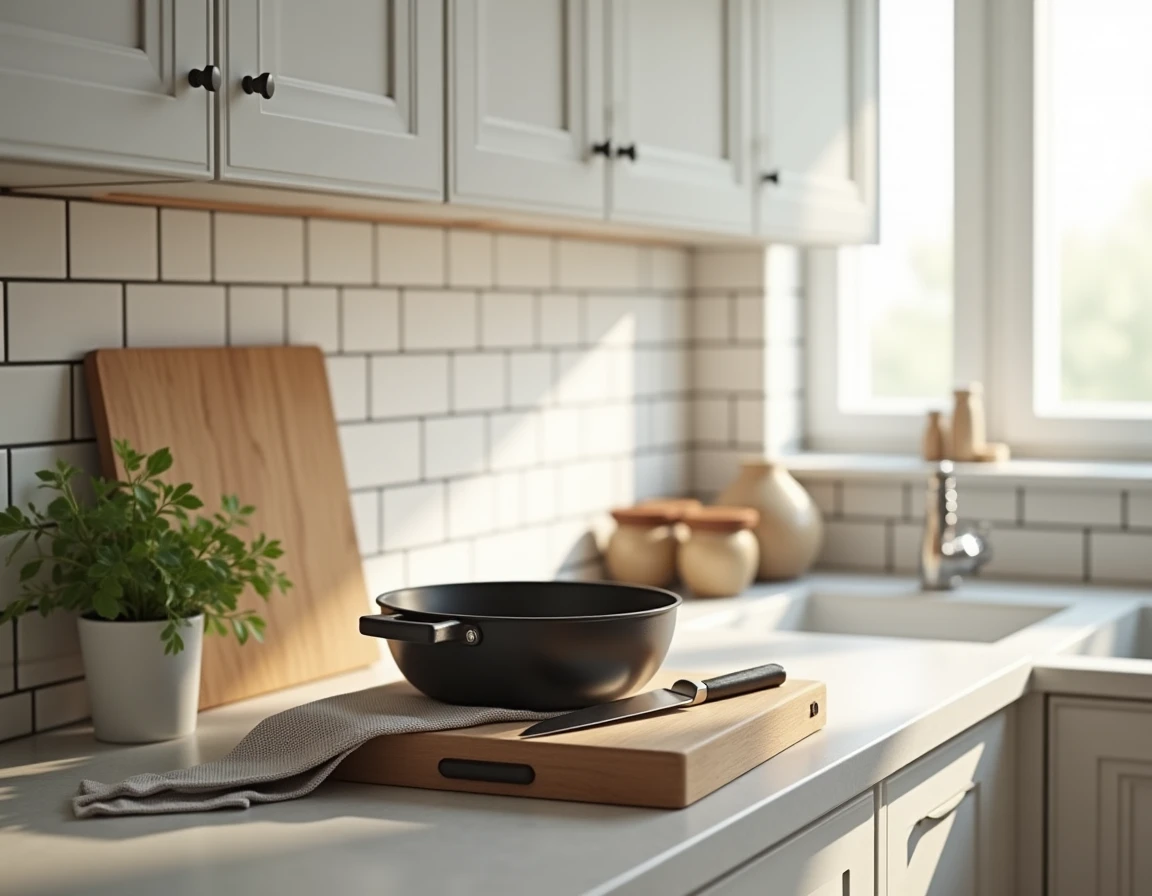
A knife that crushes instead of slicing, a pan that sticks from the first use, a mold that warps halfway through cooking: most kitchen failures come from the equipment, not the recipe. Identifying the utensils and basic ingredients that truly make a difference allows for greater consistency and enjoyment, regardless of skill level.
Steel and coating of pans: what really changes cooking
The choice of a pan is not just about its diameter. The thickness of the base and the type of coating determine heat distribution, and thus the quality of cooking. A triple-thick stainless steel pan can withstand high temperatures without warping the base, while a thin aluminum model creates hot spots that burn locally.
For high-heat cooking (searing meat, caramelizing vegetables), we recommend a stainless steel or cast iron pan. Cast iron requires seasoning, but once seasoned, it offers an almost non-stick surface that improves over time. Ceramic or PTFE-coated pans are better suited for delicate preparations (eggs, crepes, fish), as long as medium heat is never exceeded.
We observe that most amateur cooks accumulate several mediocre pans instead of investing in two complementary models: a 28 cm cast iron pan and a 24 cm non-stick pan cover nearly all daily needs. Choosing from the equipment on À Nos Petits Fourneaux helps target the right criteria before making a purchase.
Chef’s knife and paring knife: two blades are enough
A block of six knives may look reassuring, but in practice, two well-sharpened blades replace everything else. The chef’s knife (with a blade between 20 and 22 cm) is used for slicing, chopping, and dicing. The curvature of the blade should allow for a continuous rocking motion without lifting the wrist with each cut.
The paring knife (8 to 10 cm) takes over for precision tasks: peeling a vegetable, peeling a fruit, cutting shallots. Everything else (bread knife, boning knife) is only justified for specialized and regular uses.
Carbon steel or stainless steel
Carbon steel takes a finer edge and can be easily sharpened on a medium-grit stone. In return, it oxidizes upon contact with moisture and requires wiping after each use. Stainless steel resists corrosion but requires more frequent sharpening as its hardness is often lower.
The real criterion to check is the Rockwell hardness (HRC) of the blade. A knife between 58 and 62 HRC retains its edge for a long time without becoming brittle. Below that, it dulls quickly; above that, it risks chipping on a bone or hard vegetable.
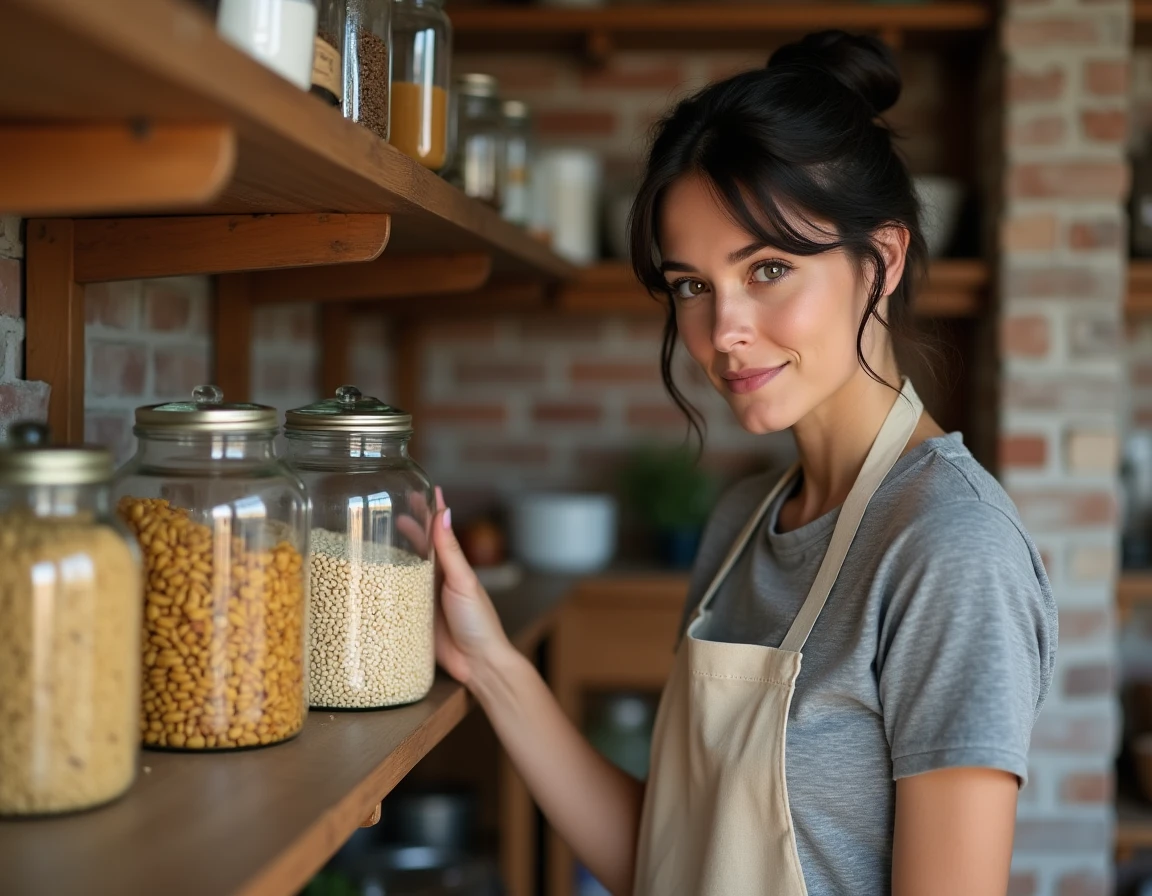
Pantry staples by cuisine: moving beyond the generic list
Classic lists of ingredients to have at home revolve around the same core: pasta, rice, olive oil, onions, garlic, eggs. This foundation works, but it confines you to a limited range.
Building a pantry based on culinary culture opens up a much wider range of recipes with few additional ingredients. Here are a few concrete examples:
- Japanese cuisine: dashi, miso, soy sauce, mirin, cooking sake, Japanese rice, seaweed (kombu, nori, wakame), and panko form a minimal kit to reproduce authentic soups, donburi, and marinades.
- Indian cuisine: cumin, coriander, turmeric, garam masala, red lentils, and coconut milk cover the base for dhals, curries, and biryanis.
- Mexican cuisine: canned chipotles, cumin, fresh coriander, lime, black beans, and corn tortillas allow for the preparation of tacos, burritos, and salsas without improvisation.
Segmenting your pantry by cuisine rather than by food category reduces waste: each ingredient serves in several recipes of the same type, instead of sitting at the back of a shelf after a single use.
Molds and baking dishes: prioritize stainless steel and cast iron
Silicone molds have charmed with their ease of release, but their flexibility poses a structural problem: the base deforms under the weight of a dense batter, and heat is transmitted unevenly. As a result, the edges cook faster than the center.
A coated steel or tin loaf pan provides an even and consistent crust. For baking, a stainless steel tart ring is a better replacement for removable-bottom molds: it allows for precise plating and cleans effortlessly.
On the dish side, an enameled cast iron Dutch oven remains the most versatile container in a kitchen. Braising, simmering, oven cooking, bread making: a single item covers dozens of recipes. Its weight ensures thermal inertia that glass or ceramic cannot replicate.
Measuring utensils and underestimated small accessories
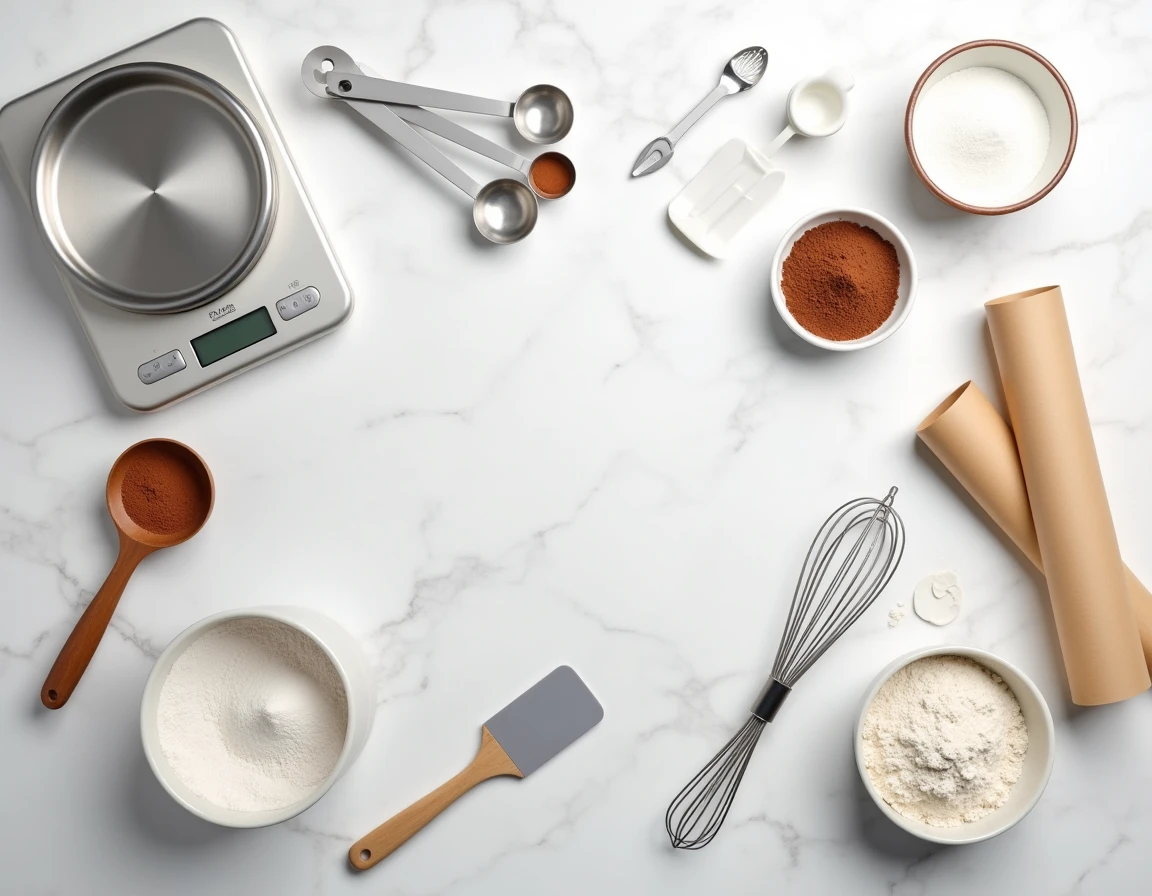
The precision of measurements separates a successful dish from a random result, especially in baking. A kitchen scale that displays in grams is more reliable than a measuring cup for flours and thick liquids.
- A probe thermometer allows you to check the internal cooking of meat or the temperature of caramel without relying on visual estimates.
- A curved spatula makes it easy to smooth creams and glazes with minimal effort.
- A Microplane grater instantly transforms citrus zests, fresh ginger, and parmesan into finishing elements that elevate a dish.
These small accessories are inexpensive and correct the most frequent mistakes in home cooking. They deserve a priority place in the drawer, ahead of unitasking gadgets that end up at the back of the cupboard.
Better to have five solid utensils and two well-maintained blades than a drawer full of items that are never used. Building your kitchen around a few well-chosen pieces, complemented by ingredients organized by culinary type, sustainably transforms the quality of meals without multiplying purchases.