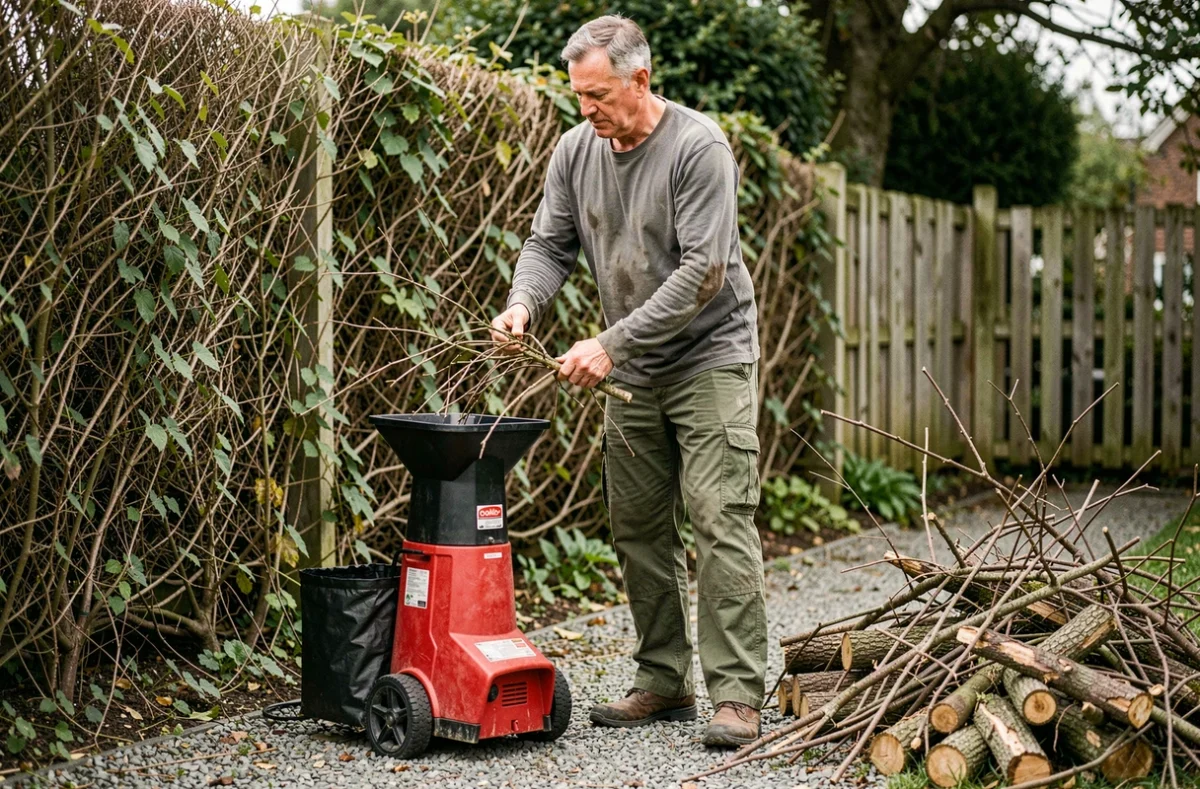
The Ryobi RSH2545B is an electric blade garden shredder designed to reduce branches up to a stated diameter of 45 mm. With a 2,500 W motor and a manufacturer-rated throughput of 120 kg/h, it sits in the range of domestic shredders intended for medium-sized gardens.
The question is how those figures hold up when the machine is plugged in at the end of an extension lead and faced with a pile of hedge trimmings and fruit-tree branches.
Cable gauge and extension leads: a technical detail often overlooked
Before even discussing shredding, it is worth considering the power supply. A 2,500 W motor draws a significant current, and an extension lead that is too thin or too long can overheat during prolonged use. This reduces the voltage available to the motor and, in the worst case, creates a fire risk.
For a shredder of this power, the cable gauge must be appropriate for the total length of the extension lead. The greater the distance between the wall socket and the machine, the thicker the cable needs to be. Manufacturers’ manuals generally mention this, but it is often overlooked when buying.
In practice, if your garden requires you to unroll several dozen metres of cable, check that your home electrical system (circuit breaker and wire gauge) can handle the load. This is an expense to plan for: a sufficiently high-quality extension lead can add a significant amount to the cost.
Ryobi RSH2545B shredding capacity: what the stated diameter doesn’t tell you
The maximum diameter of 45 mm appears on all product listings. In real-world conditions, it is best to stay below this limit, particularly with green wood or dense species. A recent comparison recommends leaving a margin below the stated diameter to avoid pushing the machine beyond its actual capabilities.
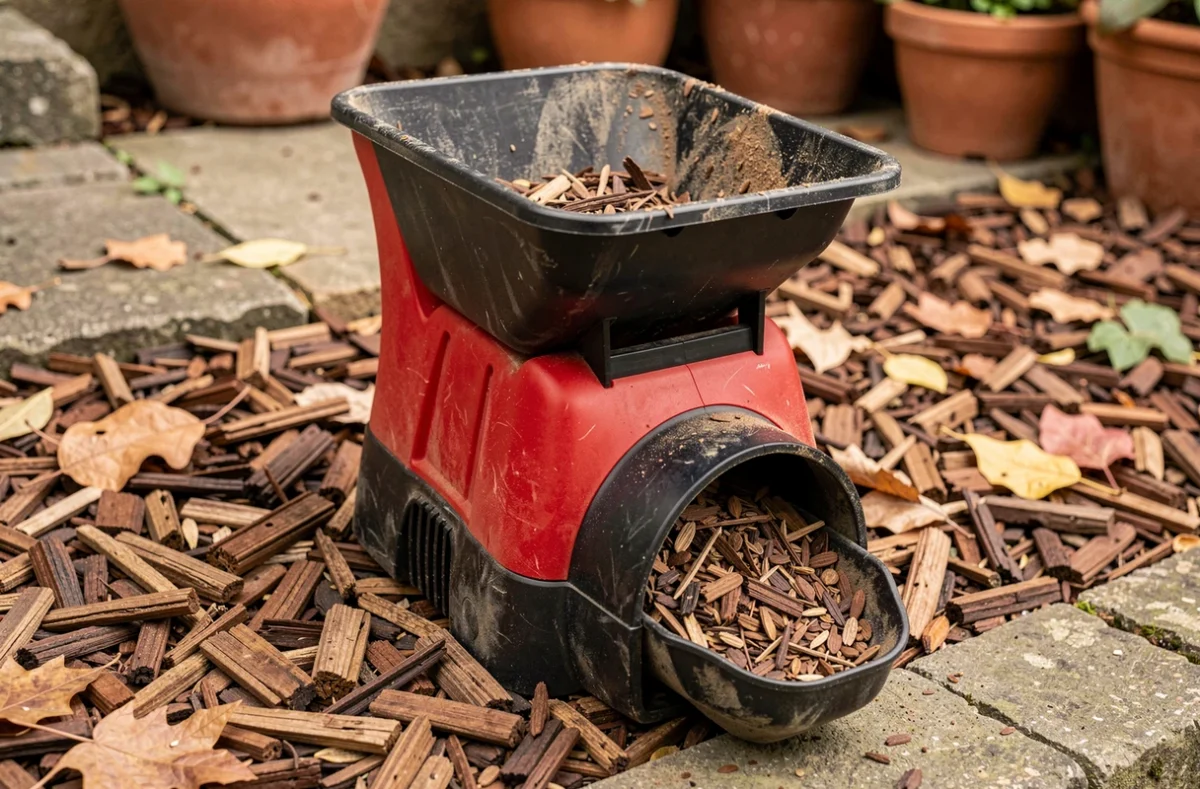
The blade cutting system (unlike that of roller shredders) chops branches on impact. This produces a fairly coarse mulch made up of irregular chips. Dry, thin branches are processed quickly. With larger pieces of fresh wood, throughput drops and jams become more frequent.
With its reversible blades and 40-litre collection bin, the Ryobi RSH2545B shredder is suitable for routine pruning in an ornamental garden: privet hedges, rose branches and fruit-tree twigs. Caution is advised with branches close to the stated maximum diameter.
Using the shredded material in the garden
The shredded material is useful for more than just reducing the volume of garden waste. The chips make effective mulch for flower beds and vegetable gardens, helping to limit evaporation and suppress weeds.
Woody material alone decomposes slowly in compost. The recommended approach is to mix it with moist materials (grass clippings, vegetable peelings) to balance the carbon-to-nitrogen ratio and speed up decomposition.
Noise and local regulations: check before you buy
A 2,500 W blade shredder produces considerable noise. This is not just a matter of comfort for the neighbours: permitted hours for noisy gardening equipment vary from one municipality to another. Some local bylaws restrict use to daytime hours and prohibit it on Sundays and public holidays.
Noise nuisance can be assessed based on its duration, frequency and intensity, even in the middle of the day. If your garden shares a boundary with a neighbour’s or you live in a housing development, it is wise to check local bylaws before planning your shredding sessions.
This is particularly important for users who only prune occasionally: concentrating several hours of shredding into a weekend may cause problems, whereas short, regular use might go unnoticed.
Buy the RSH2545B or rent a shredder? It depends on how you’ll use it
The Ryobi RSH2545B is in an affordable price range for an electric shredder. Whether it is worth buying depends directly on how often you will use it.
- For a garden that produces regular trimmings (hedges, fruit trees and shrubs pruned several times a year), the purchase pays for itself quickly, and the machine is always available.
- For a property that only needs occasional pruning once or twice a year, renting a more powerful shredder (petrol-powered or roller-type) lets you process a large volume in a day without having to store a machine for the rest of the year.
- Storage, maintenance (sharpening or replacing the blades) and the space the shredder takes up in a garden shed are indirect costs rarely included in the initial calculation.
Buying makes the most sense when you’ll use it regularly, not based on the total volume shredded over the year. Someone who trims their hedges every two months will get good value from the machine. Someone tackling a major pruning job once a year would be wise to compare the cost with the daily rental rate from a recycling centre or DIY store.
Blade maintenance and durability
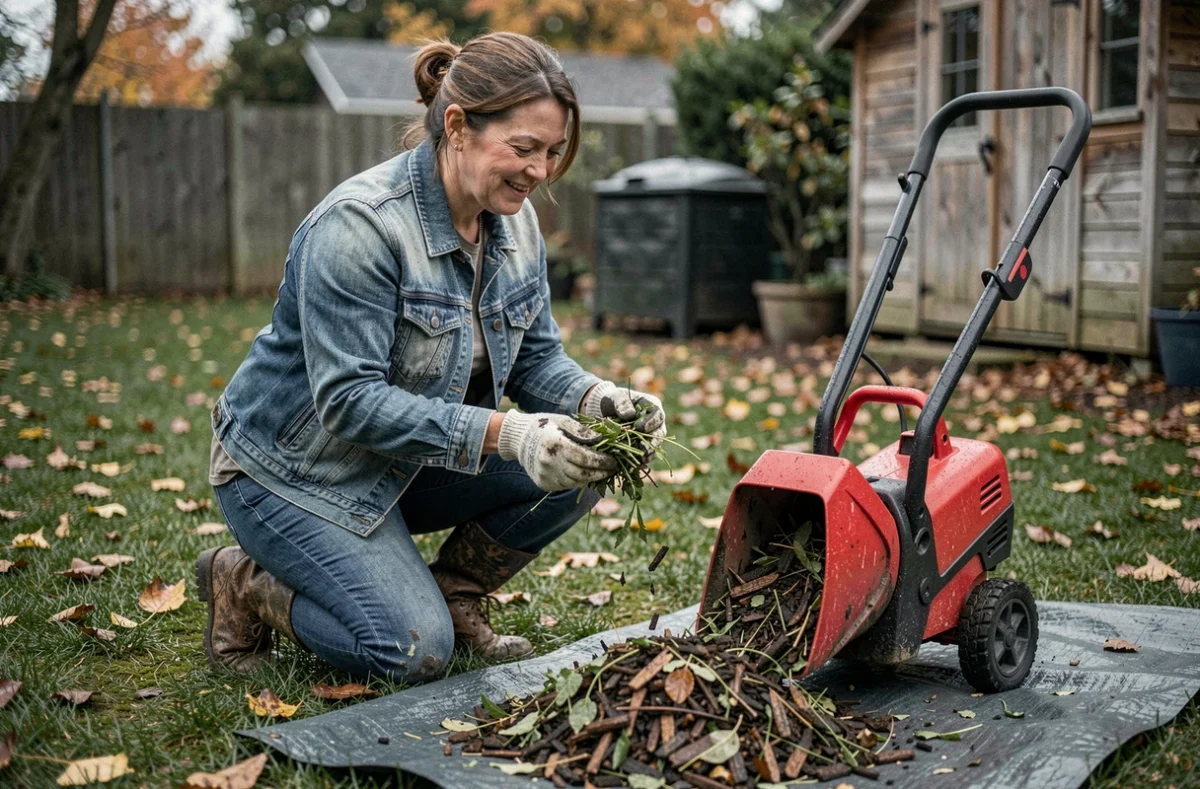
The RSH2545B’s reversible blades provide twice the service life before replacement. Wear depends on the type of wood being shredded: soft conifers wear them down less quickly than hardwoods such as oak or hornbeam.
Basic maintenance (cleaning after each session and checking that the blades are securely fastened) extends the machine’s service life. Replacement blades are still a consumable that should be factored into your long-term budget.
The Ryobi RSH2545B does the job for regular domestic use on small- to medium-sized branches. For occasional, high-volume pruning, renting a more robust model remains an alternative worth carefully pricing before you buy.