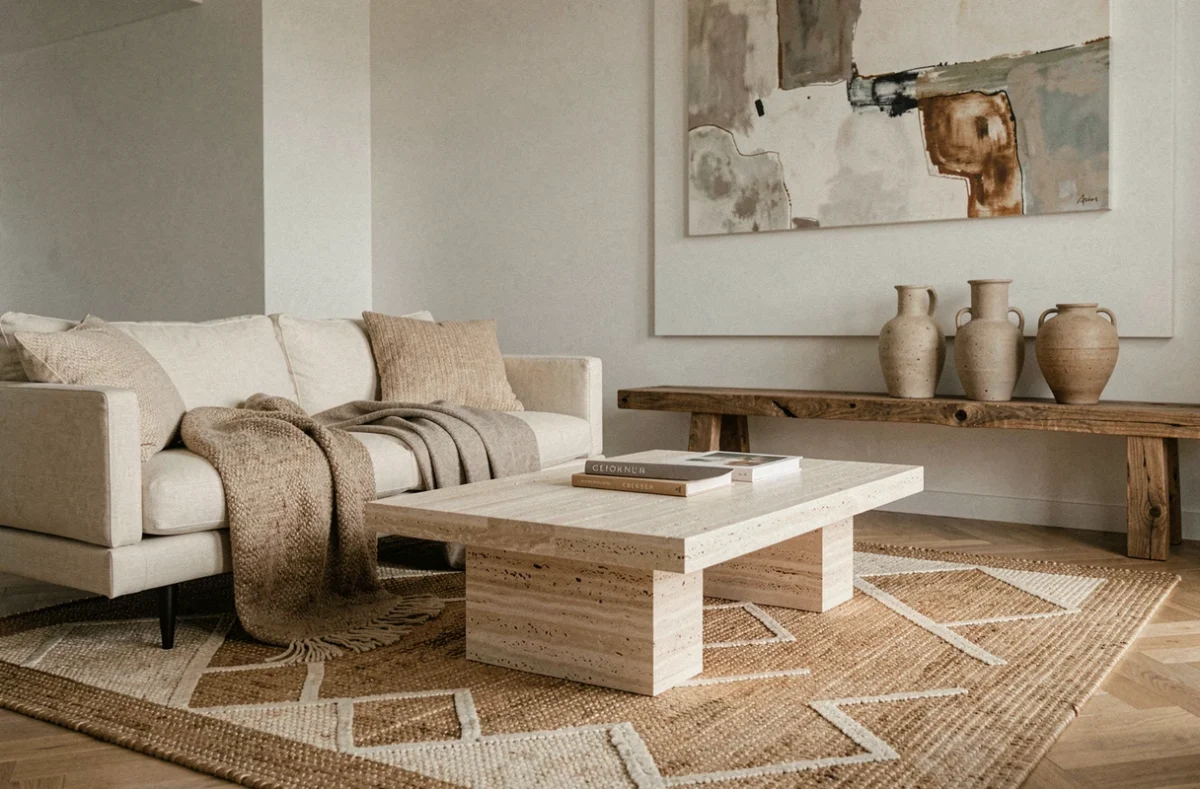
What criteria truly distinguish a sustainable interior design project from a mere cosmetic makeover? Between European regulatory requirements on furniture traceability, the rise of reuse, and the growing attention to air quality, innovative decoration concepts are no longer limited to choosing a wall color or a trendy sofa.
Indoor air quality and decorative choices: an underestimated criterion
Before selecting wall coverings or furniture, the chemical composition of materials deserves careful examination. ADEME recommends considering air quality, thermal comfort, and the lifecycle of materials used in a home together.
Particle boards, adhesives, paints, and textiles emit volatile organic compounds (VOCs) and formaldehyde. These substances directly influence the comfort and healthiness of each room. The emissions of VOCs determine the healthiness of a decorated interior.
Choosing low-emission paint or certified textiles is not an ecological whim. It is a technical parameter that affects the necessary ventilation and, by extension, the energy consumption of the home. A living room renovated with low-emission materials requires less forced air renewal than a space saturated with synthetic adhesives.
Several catalogs offered on interieur-concepts.be integrate this logic by prioritizing ranges of furniture and finishes compatible with healthy indoor air.
Reuse of furniture and decoration: a comparative table of new versus second life
The reuse of furniture is no longer a marginal approach. The specifications for 2024-2029 of the REP furniture (Ecomaison) reinforce the objectives of repair, reuse, and second life for furniture. This structuring transforms the interior design market.

| Criterion | Standard new furniture | Reused or upcycled furniture |
|---|---|---|
| Material traceability | Variable depending on the manufacturer | Verifiable history if structured supply chain |
| VOCs emissions | High in the first months (off-gassing) | Very low (off-gassing already done) |
| Style uniqueness | Reproducible in series | Unique piece or small series |
| Acquisition cost | Fixed catalog price | Generally lower, negotiable |
| Environmental impact | Extraction, manufacturing, transport | Transport only (sometimes restoration) |
A reused piece of furniture has already completed its chemical off-gassing, making it healthier upon installation. In contrast, new furniture offers guarantees of compliance with recent standards for durability and safety.
Incorporating a vintage dresser or a restored wooden table into a contemporary living room creates a stylistic contrast that mass-produced items do not replicate. This mix of old pieces and clean lines constitutes a more effective personalization lever than accumulating new decorative accessories.
Digital product passports: what the ESPR regulation changes for decoration
The European regulation on the eco-design of sustainable products (ESPR), adopted in 2024, gradually introduces requirements for durability, reparability, and recyclability for certain goods, including furniture. One of the most concrete measures is the introduction of digital product passports.
These passports will provide information on the exact composition of a piece of furniture, its estimated lifespan, its repair possibilities, and its recycling pathways. For a decoration project, this means being able to objectively compare two pieces of furniture before purchase, beyond their mere visual appearance.
- The composition of materials (solid wood, particle boards, metal, stone) will be documented and accessible via a QR code or an embedded chip
- Repair instructions and the availability of spare parts will be included in the passport, guiding the choice towards truly durable furniture
- The recyclability score will allow anticipating the end-of-life of the furniture and limiting waste during a future renovation
The digital passport transforms decorative purchasing into a documented decision. A consumer can check if the wooden sideboard they desire contains high-emission adhesives or if the chosen sofa has replaceable covers.
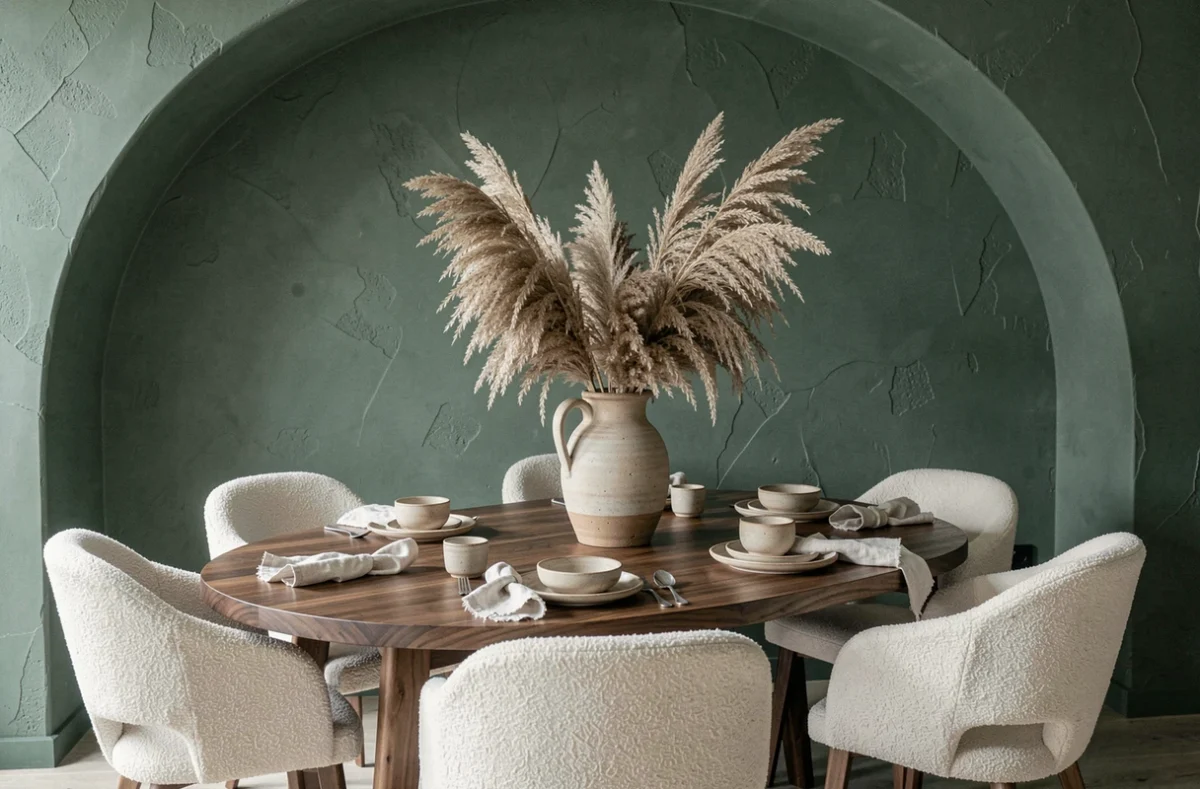
Diagnosis of existing materials before any interior decoration project
Renovating an interior without inventorying what already exists often leads to unnecessary purchases. A preliminary diagnosis identifies doors, floors, partitions, or furniture elements that can be preserved, restored, or repurposed.
An aged oak floor regains its luster after simple sanding and natural oil. An old solid wood door, re-finished in a contemporary shade, becomes a stylish element in a hallway or living room. Diagnosing before decorating avoids unnecessary replacements.
This approach modifies the usual timeline of a decor project. Instead of starting from a visual inspiration board and then ordering new furniture, the process begins with a technical assessment:
- Evaluation of the structural condition of floor coverings (parquet, stone, tiles) and their renovation potential
- Identification of existing furniture compatible with the new envisioned style, after restoration or simple hardware changes
- Verification of the quality of natural lighting room by room, to adapt the choice of wall colors and textiles without resorting to excessive artificial lighting
This diagnosis reduces the overall budget of the project while producing a more coherent result. The preserved elements bring a patina and authenticity that new furniture takes years to acquire.
Lighting and colors: adapting the decor to the actual volumes of each room
A dark wall in a small space absorbs light and visually contracts the room. Conversely, a light shade on a large flat wall can appear bland. Natural lighting dictates the choice of wall colors, not the other way around.
Measuring the amount of natural light received by each wall at different times allows for adjusting the shades. A north-facing wall better supports warm tones (terracotta, ochre) that compensate for the coolness of indirect light. A wall bathed in direct sunlight can tolerate more muted colors without darkening the space.
Artificial lighting complements this work. Multiplying light sources (sconces, accent lamps, discreet LED strips) rather than relying on a single ceiling fixture creates ambiance zones within the same living room. This layering of light structures the space without physical partitioning.
The choice of surface materials, light wood or natural stone, interacts with this lighting. A limestone floor reflects more light than a dark parquet, which alters the perception of furniture and surrounding colors. Testing associations on-site, with samples placed directly in the room for several days, remains the most reliable method before validating an interior decoration project.